Thinking about risk

Clearly there can be too much risk: some things with potentially big upsides can be too risky to take on. But can can there be too little risk?

If you totally eliminate risk you’ll never lose big, but you’ll never win big either. It’s an opportunity cost. While you were staying safe, you could have been taking risk and succeeding. Instead, you’ll have to satisfy youself with the results of safe – which are never as good as the results of risk. The downside? You have to be willing to fail.

This applies pretty much everywhere. If you try to eliminate the risk of failure, you’ll never climb that mountain, ditch that job, ask that girl out, or build the Next Big Thing.

I’m not saying you should never cover your arse: just that you need to hang it out a little bit now and then. And be willing to occasionally get spanked.

- posted 9 days ago in life

Oh, the years, they go so fast

May 1971

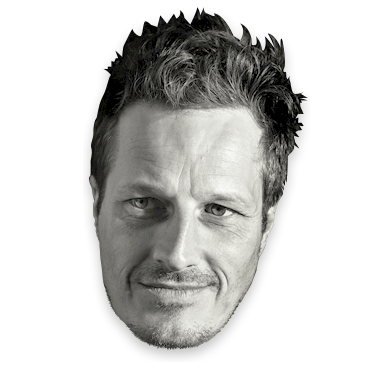
Me, May 1971.

- posted 9 days ago in life photography

Autumn, night

There is no more lovely music than the soft fall of rain.

- posted 50 days ago in writing

Coming full circle

Bikes I have ridden: year acquired/number of gears:

1975: 1
1976: 3
1983: 18
1992: 21
2001: 27
2008: 1

So a couple of days ago I succumbed to a long-felt need and bought a singlespeed bike, a Kona Paddy Wagon. Just one gear. Freewheel optional. Fantastic.

When the hill gets steeper, pedal harder.

- posted 84 days ago in environment culture

Overnight hike in the Snowy Mountains


K walking through wildflowers near Guthega. Mt Kosciusko in the far background. A magic night camping by the Snowy River, followed by an arduous trek back around three mountain peaks.

Advice for overnight backpacking:

  • Pack sheets of kitchen paper between your Trangia pans. It’ll stop rattling and give you something to clean up with.
  • Wear long pants/gaiters when walking through long, scratchy heath, or you’ll end up like me.

- posted 158 days ago in life environment

Rafting the Franklin

Got back a week or two ago from spending nine days rafting down the Franklin. It’s a very different thing, to only have one thing to do each day: to get down the river. Sometimes paddling, sometimes shooting the rapids, sometimes humping the raft over rocks or lining it down waterfalls.

There are so few wild places left.

- posted 210 days ago in life

Oldthinkers unbellyfeel Ingsoc

When I was twenty, an architect friend-of-a-friend designed a house where kitchen and shower wastewater ran in a stream across an internal atrium, the idea being that an awareness of one’s effluvia was a prerequisite for dealing with it effectively.

At the time, I didn’t grok it: I had an intellectual appreciation for environmental concerns, but I didn’t see what I do now – how intuitively right his solution was. What is it, to feel something deeply, rather than just thinking it? What’s the difference between “knowing” and knowing?

- posted 250 days ago in environment life

Up a mountain in New Zealand


Double Cone at the Remarkables after some ice climbing. I never seem to have my helmet on straight.

- posted 264 days ago in life photography

Fun with new camera


K at Mt Stromlo, in the burnt-out observatory.

- posted 327 days ago in photography

More cars, less bikes. how?

I’ve been thinking bike-positive thoughts of late, and thinking about ways to motivate people to walk/cycle/public transport their way around. It’s a challenge, particularly since my city (Canberra) is highly optimised for car transport. The roads are more direct, wider, better lit and better maintained than the bicycle paths. I can drive 13 kilometres in 17 minutes (average speed: 45.9 km/h) to get to work, whereas the same trip on cycle paths is 18 kilometres in 45 minutes (average speed: 24 km/h). So I need to spend an extra hour each day to commute back and forth by bike.

How can we start to change that equation? Conventionally, only economic incentives have been proposed to help reduce private car use – but people have repeatedly shown that economic incentives are ineffective. We should instead be thinking of using the currency which really matters: time.

Prioritise cycle routes over roads for cars: If the cycle paths were as direct as roads (or I could safely ride on the roads), I’d save almost half an hour (13km @ 24km/hr = 32.5 minutes each way).

Slow cars down: one way to make it safer for cars to coexist with bikes on the road would be to limit their speed, say, 40km/h, saving weight (smaller, less powerful engines), fuel, pollution, and noise. This would reduce the incentive to drive, help the environment, and make the roads safer for everyone. And before you think this is politically impossible, consider that we already have quite arbitrary speed limits already.

Worth thinking about?

Comment - posted 334 days ago in environment futuro

Previous